Bi(ne)rds Within


—ENGLISH version below—
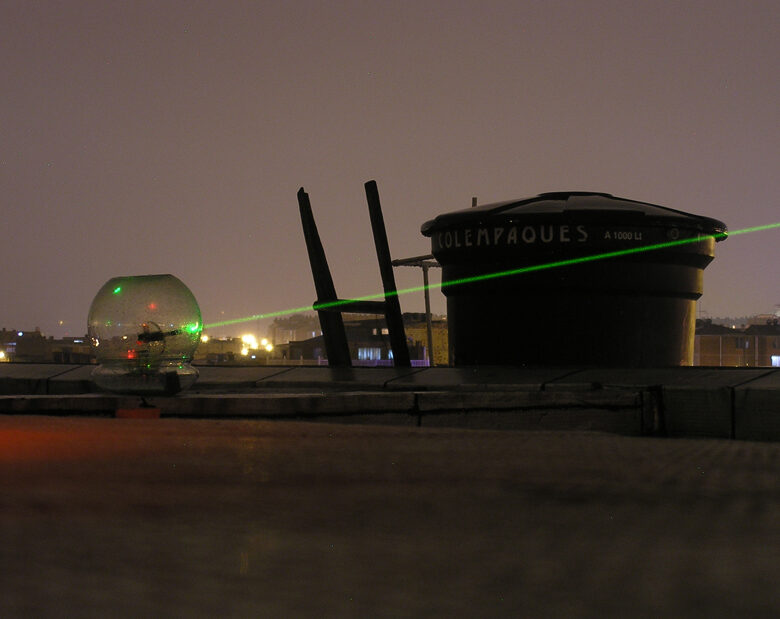
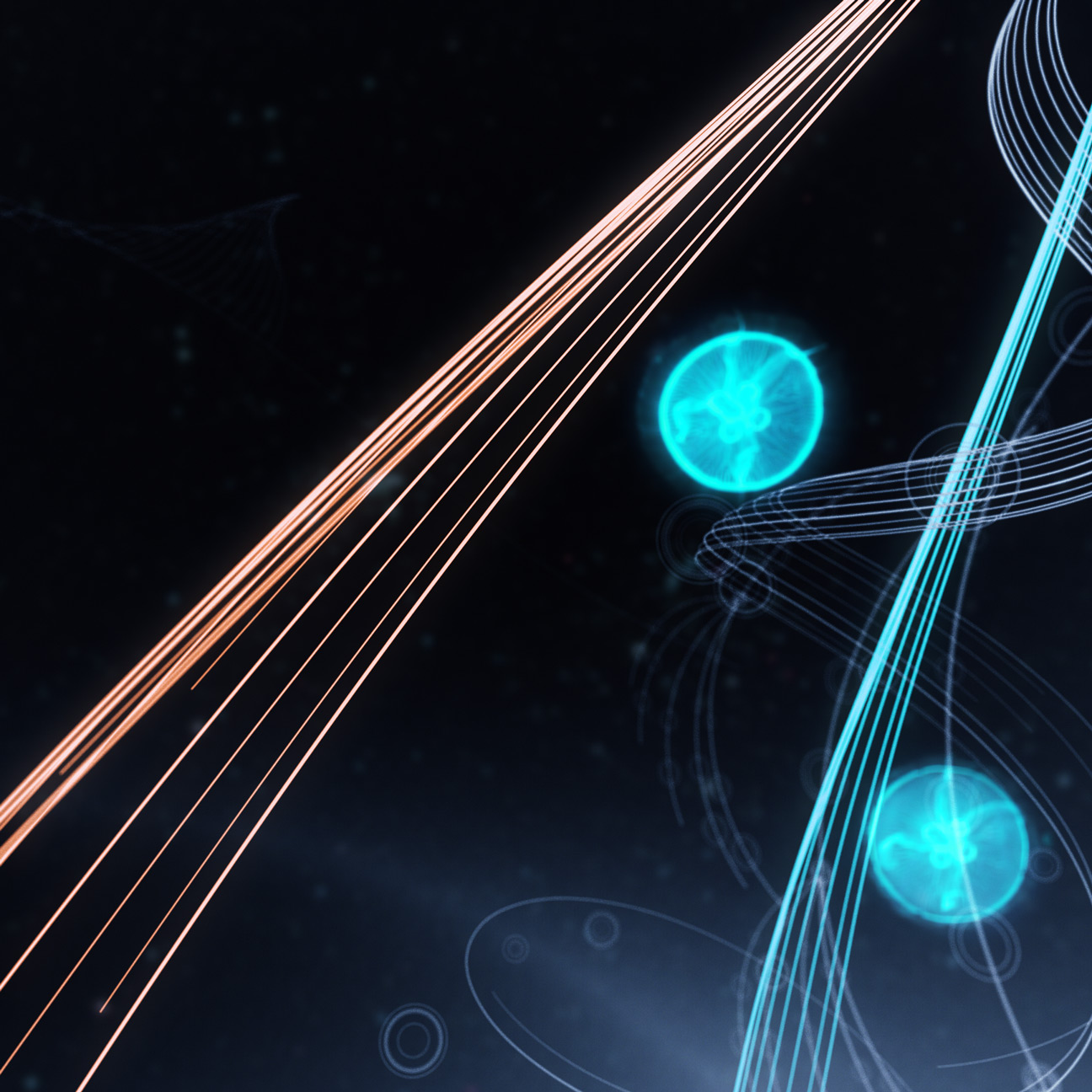
El video explica la idea base del proyecto realizado, o comenzado, en Junio en el Medialab Prado, el cual “usa una arquitectura de 3D Audio en la que diferentes tonos o loops de sonido son asignados a representaciones digitales de satélites reales cuyas órbitas y velocidad son escaladas hasta el espacio personal de quien escucha”. Como la librería JOAL para Processing no corre en un APPLET por falta de soporte en JAVA, no existe una version web de la aplicación hecha en processing. No obstante el código está disponible para su uso bajo licencia CC en el repositorio del taller en autistici:

http://code.autistici.org/trac/neighborhoodscience/browser/Birdswithin

En el wiki del Medialabprado hay más información y pronto se tendrá una página de información y colaboración para avanzar el proyecto.

http://wiki.medialab-prado.es/index.php/Birds_within


For english speakers a small introduction pasted directly from the wiki (Go to previous link for more info): “The project uses a 3D audio architecture which allows different sound loops or tones to be assigned to digital representations of real satellites which orbits and velocities are scaled down to fit the local space of the listener. This kind of soundscape aims to underline the immediacy of outer space activity, its influence in personal and communal spaces, as well as the possibility to enhance the experience of it by juxtaposing analog and digital media resources with social processes of observation and urban wandering. “

As the JOAL library for processing doesn’t work with applets, there is no online version of the application made in processing. Nevertheless, the code is available with a CC license on the workshop’s repository in autistici:

http://code.autistici.org/trac/neighborhoodscience/browser/Birdswithin

Soon a website will be available for more information and hopefully for attracting collaborators to the project

Posted under AUGMENTED MEDIA, CODING, DOCUMENTATION, ENGLISH, ESPAÑOL, EVENTS, INTERFACING, MOBILE TECH, NEWS, PORTFOLIO, PULP & FICTION, SUBCULTURE, TECHNE

This post was written by admin on July 6, 2010

So, the grid starts blossoming… a time to remember

Up to this stage of our century we’ve been thouroughly pursuing, embracing or simply reacting to models that once before were commonly approached as science fiction, Myths that were produced in that rich dialog between the imaginary and the possible, desire and technology. It is rather foggy to assert if we shape the future or if it’s the future that shapes us.

I was looking at this video and some others from Blaise Aguera y Arcas presenting the Projects he leads in digital mapping. Appart from the technical achievements showing off behind these services developed at Bing maps and the interesting aesthetic results of their concept, there are, furthermore, some hints about the coming “internet of things”, where the physical is mapped to the bits and viceversa. Indeed, at some point in the video you get a feeling of place and time dislocation that might be useful to get you out to research on the topic.

What is interesting to remark is that Mapping became the new obsession of IT and Telcos. A major “need” of our new world seems to be that of not allowing ourselves to ever be lost, but also to be able to tag and mark everything we see in its digital representation. GPS, huge user-generated databases around the web and some experiments with generative 3D animation make it now possible to gradually re-create the world inside the digital modell of it and increase its resolution, hence enhancing our experience of the mediated world. It is really base on need? Need for speed? For Information?

I just remembered, that one of the myths that I as an infant enjoyed the most from cyberpunk literature, was the later popularized idea of the matrix, or cyberspace as Gibson first called it. That space within spaces, simulated, perfect architectural illusion mapped to the real world but with different properties, dis-place of information trafficking, entertainment and international crime. In the rules of a classic sci-fi RPG called cyberpunk, different areas of the matrix could have different degrees of resolution going from wireframe (Something like Tron or an Atari shooter game) to life-realistic, this one being something like, well, basically like life itself or the one we know from the matrix films. This degree of renderization was also a fashion-related issue, each site owner defining the degree of realism, look and feel of their matrix presence, and more importantly, was geographically defined. So basically this kind of architectural sites would be mapped to a geographical location in the matrix-map of the world and being at someone’s place in the matrix was the equivalent of actuelly being there, at least in that huge world representation. Somehow each place on that model was holding its own server, not so dislocated as our actual cyberspace is like.

So far, the presence of this imaginary, if we might call it so, can be depicted in cyberspace as we understand it now: Media branding, social networks, web presence… all seem to be a simplified application of that Virtual Architecture. Websites are commonly not geographically related, but real places soon will offer access to many virtual places on top of them… We are seeing, alas the big software corps., that our bidimensional cyberspace surface is also beginning to change massively towards an indeed more realistic set of spatial metaphors intertwined with, and accessible (If ya buy the right tool) in real space. It’s not about the VR googles and the electrode suit, It’s like moving away from VR to enter the world of “we don’t know where we exist”. Dazzling.

Some more links about the internet of things, if you allow me. Just to finish:

http://www.theinternetofthings.eu/what-is-the-internet-of-things
http://www.iot2010.org/
http://www.bing.com/maps/
(Got to be a Windoes guy if you want to check the 3D stuff, it seems. Non-existing help for Mac Users…)

Posted under AUGMENTED MEDIA, ENGLISH, HISTORY, MOBILE TECH, PULP & FICTION, TECHNE

This post was written by admin on February 12, 2010

Tantalum

Giving a new look at the Coltan Wars and their unbearable ciphers in human life costs, suddenly the whole mythology of cybernetics seemed to be embodied and localized all over a human settlement: Congo, the country where the machines turn against men…using men themselves to destroy their own kind. Numbers change with sources, but we speak about more than 4 Million dead -and counting at a rate of approximately 45.000 monthly assasinations-  in the last decade as a consequence of the civilian war, which is partly ethnic but has been drastically inflated by the Tantalum Rush. We are approaching extermination statistics and somehow everything keeps its march quietly. Could we ever stop assigning more value to metals than to the potential of living beigns? What do we understand for “Value”?

Coltan is an abbreviation for colombo-tantalite ore, a mineral from where Tantalum is extracted. Tantalum is used to assemble capacitors needed to assemble the microchips present in cellphones, game consoles and PCs (MACs too). A capitalist, machine-dependent economy increases the revenues for providers of this mineral and hence they go frenzy in their greed. People in the area seems to have no more option than to mine the mineral in order to get money but at the cost of being in the middle of the fire- “greedline”.

http://globalinvestmentwatch.com/wp-content/uploads/2008/12/congo-coltan-map.jpg

http://globalinvestmentwatch.com/wp-content/uploads/2008/12/congo-coltan-map.jpg

A map showing the geography of the conflict.

Read More…

Posted under AUGMENTED MEDIA, CONSERVATION, DOCUMENTATION, ENGLISH, EVENTS, HISTORY, NEWS, THEORY

This post was written by admin on February 24, 2009

Tags: , , , , ,

Deep North Gone

Difficult to write in situ within a festival that inmerses you day and night into intense mental and physical activity. Exhibition, club, conference, walk over the Reichstag 10 times a day…After finishing, I started to work and stopped thinking, so perhaps, now I’ve forgotten most of what was important to say. Nonetheless, I’ll make a couple of annotations.

. Transmediale Architects didn’t use any new materials for the setup this year, they grabbed everything that Mr. Kovats had stored from previous festivals in his warehouse and built what they did with it. So the trashy look aimed to look like a sort of experimental field and to speak about sustainability, recycling, hacking, among other key topics about the environmental emergency. The connection was there indeed and somehow worked, even though the only video that won a prize was the only one that had a proper exhibition room. Not to say that this had something to do…but the projections on plastic fabrics were an attack to picture quality. Anyhow, no other work using video different than six appartments (3rd prize) gave so much relevance to image resolution subtleties, so no more complaining. It gave also a nice atmosphere in some areas.

. The Tantalum Memorial that so much captured our attention even before the festival, took at the end the big prize, that wasn’t actually so big ( €5000 for a group of 3 artists and their helpers), but a good push. It gave the general impression to be the most deep and well investigated work, as well as the most developed. Even though something important was definitely lacking in the spectator’s experience of the installation, the artists could manage to push the concept through, albeit a delicate problem with severe implications that was exhibited with the work itself, a good conference and some documentation.

This work definetely aroused a big deal of ethical thinking about IT (Information Technology) in the festival. The coming post will go into the delicate Matter that the Memorial has awaken or reactivated for some.

Posted under AUGMENTED MEDIA, CONSERVATION, ENGLISH, EVENTS, HISTORY

This post was written by admin on February 13, 2009

Tags: , , , ,

First impressions

Yesterday the Transmediale.09  was oficially opened under the name Deep North.

Evelina Domnitch  performing

Evelina Domnitch performing at the opening ceremony

The first thing I saw was a cook frying integrated circuits covered with a mix of eggs and Silica Gel, and baking pizzas made with electro-resistors, cables and spare electronic parts. There’s a good sense of humour in the air, and no respect at all for technology. That’s relieving.

The director Stephen Kovats presented the event as the most supported and well funded version in recent years and was enfatic about the support of Berlin’s Culture Senate. At a first glance, Transmediale looks the same as always, with a main hall populated by some main works, including those I quoted on my previous post, and many different spaces offering a selection of video projections, installations and satellite events.

On the surface, the first thing you get a bit concerned about is architecture. The exhibition’s architects are a Berlin company named “Raumtaktik”, or “space tactics”, who decided to build a kind of “under construction” context for the exhibition. Materials used are wood and those rough polyurethane fabrics they use to close construction sites and the like. Most information texts are not aligned, intentionally twisted and fixed with thick industrial adhesive tape. In contrast with the kind of language used in the trailer and the cleanliness of the icy, polar and quite romantic (The speaker from the German Federal Culture foundation reflected on some Friedrich’s painting of the north pole in her speech) imagery being passed around in slides, print and other visuals of the event, the montage looks so trashy, that I’m still trying to find a connection. The space of the HKW is indeed hard to handle, but simpler and cleaner solutions can also be transgressive and better suited to give a chance to the works being shown.

For instance, the “man with a movie camera: the global remake” project has been completely fulminated by the dense structure that makes it look like a video ornament projected on top of it. This happens with many other videos and gets worse with some installations, where it’s difficult to say what is part of the work and what of the architecture. Coming back to the works I was expecting to see, the “Tantalum memorial” is there too and looks pretty nice as a weird proto-digital device, but nobody gets what it is about: When you use the headphones, you just hear recordings in congolese without any apparent linkage to the limited informations on the screen, and the machine is completely autonomous, making it a completely closed system that contradicts commmunication processes from every point of view. I couldn’t get the chance to speak with the authors, might someone help me understand what are the dynamics of this piece? How was it planed and executed in London?

Among many other observations, I cannot avoid to feel myself a bit frustrated by these features perceived during the first hours of the festival, but also enthusiastic about the content and the diffusion being done this year. Conferences will be streamed everyday and alternate events promise a series of deep talks and motivating shows like the performance of Evelina Domnitch and Dmitry Gelfand with TeZ. Coming in the next days, video selections plus talks and discussions, plus the result of work done whithin some workshops will give us a more or less common platform to base our opinions on. So far…

Posted under AUGMENTED MEDIA, CONSERVATION, DOCUMENTATION, ENGLISH, EVENTS, NEWS

This post was written by admin on January 28, 2009

Tags: , ,

Augmented cellphone

This interactive Wall is part of my Thesis for the Master I just completed. It explores the advantages of using visualization techniques to generate multiuser interactivity with a complex set of data in real space. In other words, it is a data visualization displayed on a wall, with which different users can interact simultaneously through their mobile phones and movements around the space. The data to be visualized are messages from other users and it acts in the first instance as a message board, where people can add and retrieve messages in a playful and simple fashion.

The interface was programmed in Java-Processing (http://processing.org) and it is entirely code-generated. A small java Midlet was programmed in the mobile version of the same language (http://mobile.processing.org) in order to be installed in the users’ mobile phones and allow communication between devices. It uses bluetooth to communicate between cellphones and the main application. The installation also uses cameras to track location of the users and react according to the position of each one of them.

Posted under AUGMENTED MEDIA, ENGLISH, MOBILE TECH, PORTFOLIO

This post was written by admin on November 13, 2008

Tags: , , ,